
TW: This article references the enslavement of Afrikan people.
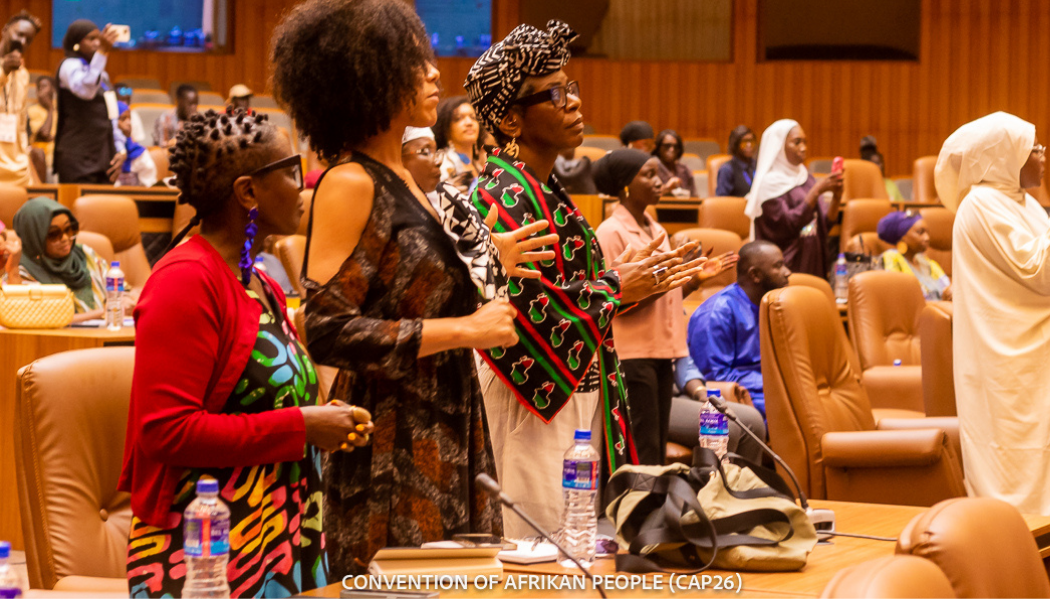
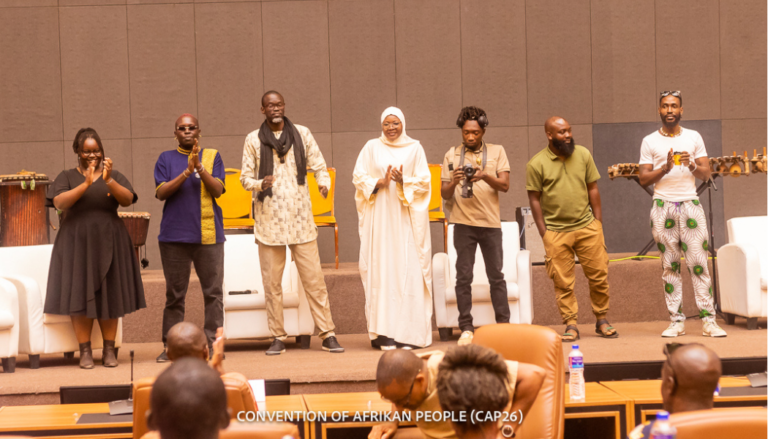
I recently visited Gambia (or ‘The Gambia’ as it is officially called). I am a member of Professor Kehinde Andrew’s Harambee Organisation of Black Unity (HOBU) which had arranged to hold a two day convening on Pan-Africanism in Gambia, sixty years after the assassination of Malcolm X.
In 1964 Malcolm X founded the Organisation of African American Unity (OAAU) with the aim of bringing together all Black activists and organisations in the United States, to coordinate and strategise the way forward for the community. HOBU is founded on the same principles and the Convening aimed to re-invigorate Pan Afrikanism both in Afrika and throughout the Diaspora!
I had an amazing two days at the Convening and later I will share some of the (many) things I learned during that time. I am also sharing lots of the brilliant and joyful photos during the convening by Buba Sanneh. Please do check out his Instagram page. First though, I was fortunate enough to spend a full week in Gambia as part of my first ever visit to what is fondly termed Afrika’s smiling coast. Wrapped in a full hug by Senegal, bar a gap that hosts the mouth of the river flowing out to the Atlantic Ocean, there are many tales I could tell about how I spent my week there, but it would make for an even longer article than this already is! Instead, I will focus on my visit to Kunta Kinte Island.
Many people visiting Gambia will make the trip to Kunta Kinte island as the name is very recognisable to many who were born and grew up in America or the UK. This is because of the hit TV show, Roots, which charts the life of Kunta Kinte, who in the 18th century, was stolen from Afrika, specifically Gambia, endured the horrors of the ‘middle passage’ on ships carrying those stolen to the Americas, and was he was enslaved for the remainder of his life. Six subsequent generations of Kinte’s family were born into enslavement and the TV programme depicts this through several series. Many might remember characters such as Chicken George and Aunty Kizzy.
Written by Alex Haley (a direct descendant of Kunta Kinte), Roots put the story of enslavement of Afrikan people and Afrika as a whole, firmly back on the agenda in the late 1970s. It was later alleged that Haley’s story was unauthentic as no documentary evidence could be found for parts of the story as told to Haley by a Griot (West Afrikan oral historian and storyteller, who preserves genealogies and traditions through song and spoken word). There’s no doubt that despite the lengths Haley said he went to when it came to finding out the truth about his ancestors, the whole story probably isn’t fully accurate. That’s not surprising given how the history of enslavement has been diluted to the threat of non-existence in the Global North. However, the fact that historians and expert novelists went to such lengths to discredit the story, serves in my view to speak to the Global North’s desire to never fully share or accept the truth of what it did to millions of Black Afrikan people throughout West Afrika.
Kunta Kinte Island, formerly known as ‘James Island’ whilst a British fort, is now a UNESCO World Heritage Site and was re-named in 2011 in Kinte’s honour by the Gambian Government. When you visit Kunta Kinte Island you are immersed into the beginnings of Kinte’s (and millions of others) journey from the moment they were kidnapped. As it’s located in the Gambian river, 3 miles away from the mainland, those captured had no means of escape back to any measure of safety in nearby villages like Juffureh and Barra, along the shore line they could see, but could not reach. Once captured, they would be shackled, put on small boats and taken to the fort where they would remain for two to three weeks in extremely violent and inhumane conditions. After this, the same small boats would take them further out to sea; Kunta Kinte island was well located for the trading in the enslavement of Afrikan people, as its location is at the mouth of the river as it spills out into the Atlantic Ocean. The enslavement ships would arrive, ready to take people like Kunta into a life of enslavement, leaving generations and generations never seeing their homeland again. Languages, cultures, names, all lost. Kunta’s story is famous for him refusing to accept a name given to him by his enslavers and is one of absolute resistance and rebellion towards his oppressors, passed on and on to his descendants.
It was an important visit, made the day before the first of two days of convening. And although it was incredibly hard, it connected me more closely to the Continent and provided me with the roots of my understanding of the importance of stronger intellectual and cultural links between Afrikans on the Continent and those of us in the Diaspora.
Below are 7 things I learned in the following two days:
1. Learn, Build, Organise
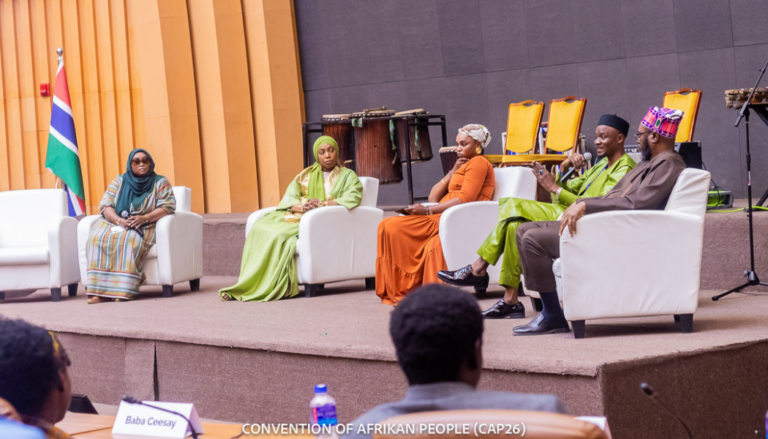
There were many contributors over the course of the convening from many parts of West Afrika and the Disapora, speakers, panelists, artists, musicians and more. What resonated for me was that dismantling alone will not free us, we need to build (and re-build) with dignity, with purpose, and with each other. I heard this message often and I was reminded of two things; one, how easy it is to focus on the disrupting and the dismantling of the systems that oppress us, and two BLMUKs 3 Rs strategy of Relief, Repair, Restructure.
As Afrikans, we have a shared struggle and a collective liberation. Before we can get to the latter we need relief from the former followed by repair and restructure. This requires us to build our political education. If we do not know where we come from, we cannot know who we are. It is imperative that we hold global discussions on oppression and our resistance to it. This is the building and the rebuilding. If we want liberation, we need to plan what that looks like, together. Otherwise we will continue to replicate the systems that have been embedded in us and that we are familiar with. The question we have to hold space for is:
What happens the day after liberation?*
This is a question also explored in the brilliant novel by Cebo Campbell – Sky Full of Elephants. You can buy it at Afrori Books and keep supporting Black owned bookshops!
2. Movements are Sustained By People

Kehinde Andrews (he does not like to use his title of Professor even though he is the first one of Black Studies in the UK) spoke during the convening and reminded us that Afrika will go no further than we will (in the Diaspora) and the Diaspora will go no further than Afrika will. We need each other and we need to build together.
The space opened up questions for us to consider, unpick and imagine:
How are we showing up for each other?
What does it mean to imagine more than just surviving?
What is Black unity?
What is kinship?
What seeds can we plant and grow and nurture over time?
A testament to our unity was seeing individuals, organisations, institutions all coming together for the convening. There was no doubt pulling CAP26 off was going to be seriously challenging. It required all of us who made it, to do so with radical hope and optimism. The result: Afrika spoke and the Diaspora answered!
3. Creativity is Life Affirming
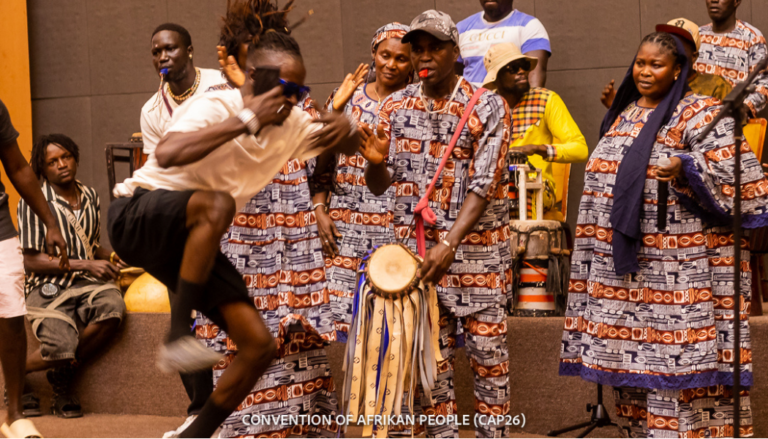
The theme of the convening was “Voices of Afrika and the Diaspora”, with a focus on the role creatives have in education, writing and the arts as means of decolonisation. Explorations considered how this is achieved and the struggle to resist the persistent reduction of Afrika and the Diaspora, to long standing stereotypical portrayals based on age-old colonial and Western clichés.
Conversations were interspersed with cultural, traditional performances from The Gambia Academy. The young people from the Academy joined a panel discussion so we could learn more about its importance and understand the need to build political education in practice. Listening to them speak on this was pure joy. ARC loves creativity, so it was a pleasure for me to listen to poets and musicians feeding into the wider conversations around culture and identity.
As Afrikans, we have a long tradition of oral story telling (remember the Griot I mentioned above as part of Kunta Kinte’s story) and the theme of the event demonstrated the need to keep on spotlighting and uplifting the importance of Afrikan perspectives in story telling and cultural expression. Through collaborations we can all play a role in strengthening this.
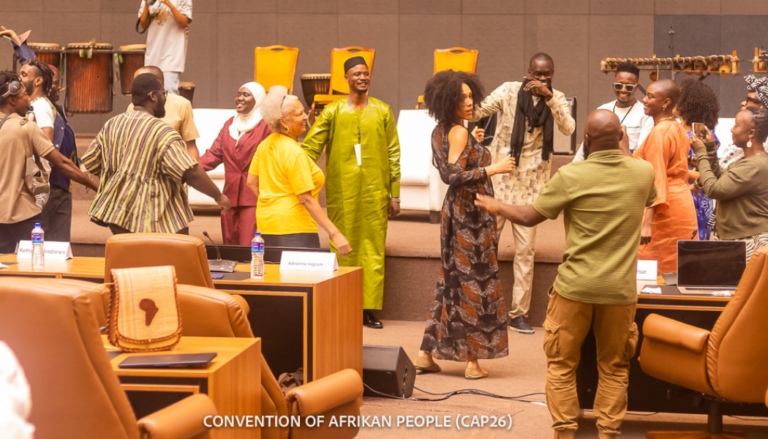
The two days ended on a wonderful high with everyone dancing and joining a musical performance from Gambian siblings Barhama and Mariam Cham.
4. Literature is a Form of Resistance
The creativity didn’t stop there! We were absolutely treated to a wonderful journey of how literature is our super power!!
The Library of Africa and the African Diaspora (LOATAD) talked us about how they are redefining the literary canon, with a mission to celebrate and champion Afrika’s rarely acknowledged contribution to the global literary canon. LOATAD hosts residences for Black artists and writers based in the Diaspora or on the Continent. It is both a museum and a creative space promoting knowledge of Black people. And a shrine and a sanctuary where creatives can go to learn and see themselves. Just bloomin’ awesome!
LOATAD hosted The Creatives of the West African Road Residency which saw a group of young Black creatives take a 18 day, 3000km journey from Accra (Ghana) to Banjul (Gambia). This was not a road trip. It was a radical act of reading the road, through listening, seeing, movement, and memory. There are 16 countries in West Afrika and they travelled through 8 of them; from Ghana, through Côte d’Ivoire, Liberia, Sierra Leone, Guinea, Guinea-Bissau and Senegal, engaging with local histories, landscapes, and communities. Along the way, they responded to curated prompts, gathered stories, and produced creative work, before arriving in Gambia 24 hours before the Convening started. This culminated in an afternoon of sharing with Convening participants and will later be published in a Pan-Afrikan anthology and travelling exhibition. Look out for that, their stories were creative, beautiful, funny and at times poignant, as they recounted the highs and lows of their journey. It was hard to hear how challenging it is for Afrikans in Afrika to move freely within their own borders (imposed upon them by colonialists) and a group of us had an interesting conversation about our yellow fever cards. Between that conversation and the experiences we heard from those young Black creatives, we concluded that Pan Afrikanism is further away than we might like. Still we immersed ourselves in radical hope of this being a reality one day.
More creative Afrikan voices need to gain greater visibility in global conversations. Literature is a real source of resistance and the voice of the Diaspora.
I learned and really liked the term “edu-taining” = education + entertainment. Having the Gambia Academy and literature guests evidenced how creativity is a tool of resistance, unlocking the doors to our mental and emotional freedom.
4. Pan Afrikanism Terrifies The Global North
We don’t talk about this enough! Hearing that the week before the Convening, three Afrikan presidents centred Pan Afrikanism in speeches they were giving about empowering the Afrikan continent and its Diaspora both politically and economically, brings radical hope. Pan Afrikanism has always been a threat to the global west. The idea of Black people coming together to attack the racist foundation of society by creating and supporting our own institutions and organizations, sends the global west into spinning panic. Each time Pan Afrikanism appears to be gaining strength again, the oppressors work to suppress and disrupt it. Pitting us against each other and going to extreme lengths in the form of coups and murder. We need to know our enemy and stand together. Let’s keep Pan Afrikanism on the agenda.
Thank you William Ruto of Kenya, Bassirou Diomaye Faye of Senegal and Ibrahim Traoré of Burkina Faso.

6. The Power of Language And Dialects
A real highlight for me was that several parts of the Convening took place in local languages. Many there joined in with translating for those of us who could not speak Mandinka, Wolof or Fula (Gambia) and Senegalese French. It was (surprisingly) a really inclusive experience, listening to languages that have been lost to so many of us, highlighting how speaking in one’s own language builds community power, retaining identity and creating trust. We didn’t understand the words, but felt safe in the space which made room for authentic connection. I was struck by how much local spoken languages gives power to the oppressed and allows stories, which would otherwise be lost, to be passed down and shared. There was a deep sense of connection in the room. We understood each other across the Diaspora and I felt like I belonged there.
One young political panellist in particular, had been waiting for his interpreter to arrive and although he replied to the questions from the chair in English, whilst he waited, once his interpreter arrived, he came to LIFE! He had so much to say and he was proud to say it in Wolof. When one of the audience members asked him a question in Wolof during the Q&A, we watched the exchange between the two of them in excited anticipation. We never did get the full translation but everyone clapped and cheered nonetheless, understanding and expressing our agreement that ‘minority’ languages should not be suppressed but instead should act as a tool of resistance against the dismantling of indigenous cultures.
7. Afrika not Africa
You’ve probably noticed that throughout this article I have spelt Afrika with a K and not a c. This is a conscious decision, not a mistake. The ‘c’ comes from the English translation of the word and is a result of colonialism. Indigenous spellings (often using ‘K’) were replaced by English, Portuguese, or French spellings (using ‘C’ or ‘Q’). Sound familiar? That’s because the practice of changing our names is not new. Black and Brown people worldwide still often have to change their names to suit the Western world as ‘it’s too hard to pronounce’. My own children have been asked on too many occasions ‘can we call you something else?’ Yet, on the Continent, we do not ask the same in return. We simply learn how to say the name.
Today, Pan Afrika often consciously writes the word with a K as an act of resistance which acknowledges the existence of Afrika long before it was colonised. I am committed to doing the same.
It’s fitting I think to finish this article with this Afrikan proverb (which takes several forms but the meaning remains):
“Until the lion tells his side of the story, the tale of the hunt will always glorify the hunter”.
Me and Marsha Garratt, my educator, my scholar, my friend, were blessed enough to see Lions in Senegal. Although they did not tell us the story, I was reminded about it’s importance for our liberation.
