

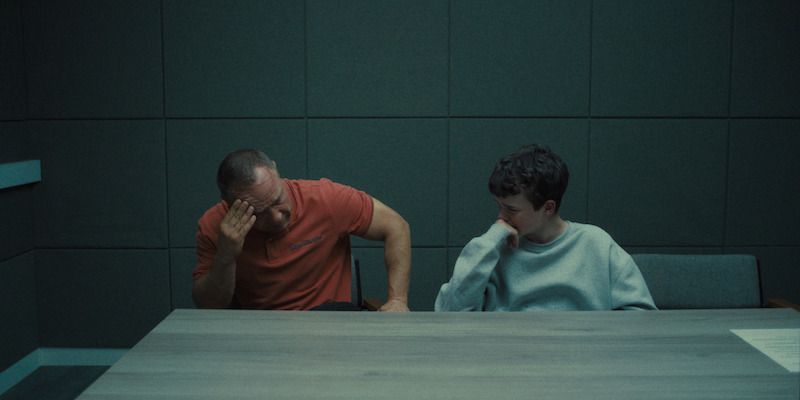
Like the rest of the world it seems, we’ve watched Adolescence. It really is a brilliant, creative piece of drama, with stunning performances from all of the actors. It’s been great to see everyone talking about the significant problem posed by misogyny, incel radicalisation, and violence against women and girls since it first aired a few weeks ago.
Having said that, we’re troubled by some elements of the media commentary, the wider conversation which has come from it, and the suggested ‘solutions’.
There is a lot to explore here, and it is a complex, sometimes triggering conversation so we encourage you to take a few deep breaths to centre yourself before reading on.
- Representation, Backlash, and Misogynoir
Alongside praise for Adolescence, there has been backlash, particularly around the decision to cast a white boy as the perpetrator.
Some claim a Black perpetrator would have been more ‘realistic’. Knife crime, they say, is a ‘Black problem’ or even ‘Black on Black crime’.
Take a look at this quote from a 2020 British Medical Association (BMA) Public Health paper:
“No association was found between gender or ethnicity and youth violence, contrasting current understanding shown within the media. Multiple research papers identified adverse childhood experiences and poor mental health as positively associated with youth and gang violence. It was suggested that community and societal risk factors, such as discrimination and economic inequality, were frequently linked to youth violence” ~ BMA Public Health 2020.
Statistics show that knife crime is not a ‘Black problem’ at all and instead a result of numerous factors. So why is there an ‘expectation’ that the perpetrator should have been Black? Why is there an ‘outrage’ that he wasn’t? Where does this come from?
Not only is there an assumption that it’s a ‘Black problem’, when the perpetrator of a knife crime is white, there is a stark difference in the approach taken. The Violence Reduction Unit in Glasgow, where knife crime is predominantly perpetrated by white boys is a great example of this.
Anti-racist activist Femi Oluwole (aka Femi_Sorry) posted on socials to highlight the empathetic, public health approach which was taken in Glasgow, and the positive impact it’s had on the prevalence of knife crime.
Karyn McCluskey, one of the co-founders of the Glasgow unit described the approach:
“It’s about data, what causes the violence, where are the risks and how can we reduce them, how can we prevent it, and then looking at all the things that work. That’s the public health model”.
Yet when Black boys are involved in knife crime, the narrative is that they are inherently violent because they are Black. After looking at the approach to knife crime in Glasgow, it is ridiculous to claim knife crime is a ‘Black problem’ or that Black boys are getting involved in knife crime because they are ‘more violent’. They are doing it for all the same reasons white boys are.
The different narratives about knife crime go even further. Think about these questions.
- When a white boy is radicalised and then commits a murder or even a terrorist act, are all white boys as a group blamed? Can the same be said for Black boys?
- Is the murder then used as ‘evidence’ that white people, and white boys, are inherently violent, bad, and a threat to society?
We need to look behind the noise and question where the backlash about the casting has come from.
We know that these racist narratives are peddled by politicians and the media in order to reinforce the already prevalent (and false) stereotype that Black people, especially boys and men, are inherently violent. Politicians and those on the far-right can then use this to get support for anti-immigration policies, or policies which further marginalise Black and Brown people. For some, there is also an ingrained desire to deflect away from having to face up to the problem of misogyny and violence against women and girls, and how they might play a role in it.
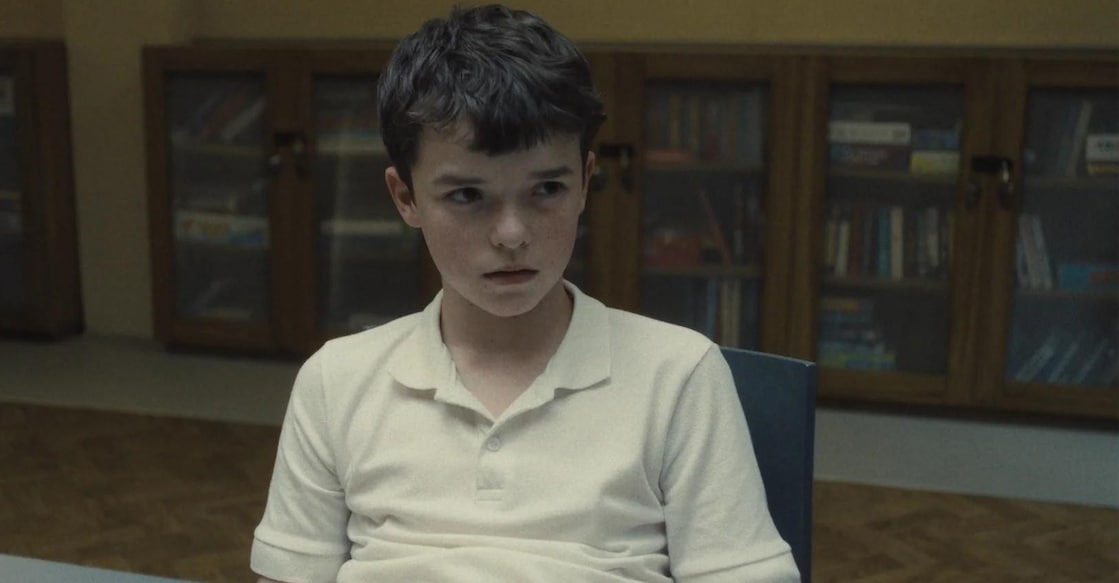
So, what did we think about the perpetrator being cast as a white boy?
We thought it was incredibly powerful. It shone a light on a problem which many have been shying away from for too long, and it perfectly demonstrated how whiteness impacts how you are treated within the criminal justice system.
In the first episode we couldn’t help but notice the caring way some of the police officers and health professionals treated him. They very much viewed him as a young child (which he is at just 13 years old) and there seemed to be an underlying disbelief that he could have committed a crime like this. It was almost as if some of the staff hoped he was innocent. Think back to the gentleness of staff such as the desk officer at the police station, who is normally portrayed as bored and indifferent at best, or even aggressive – especially if the suspect is Black.
We know that Black children are treated more harshly than white children within the criminal justice system. They are much more likely to be physically restrained, treated with suspicion or as older than they are, and viewed as adults responsible for their actions rather than as a child that needs protection. Last year’s statistics show that police are four times more likely to strip search Black young people than white young people. Fewer than half of all searches of children in that year (45%) were conducted in the presence of an appropriate adult.
This is well-known and there is even a term for it. Adultification: a form of racism perpetrated against Black and Brown children where they are treated as adults in a way that white children aren’t.
We couldn’t help but question, if the perpetrator was played by a Black 13 year old how might that first episode, and the whole series, have played out?
How might audiences have engaged with the character and the storyline? Would there be the same emotional connection, the same sympathy? Would there be as much of a conversation happening right now?

We can’t move on without taking a look at the portrayal of some of the Black characters in the show.
While representation can be tricky, it is important that work on this continues, so seeing both Jade as the best friend of the victim, Katie, and the DI Bascombe as the lead police officer were positive signs.
It was refreshing to see a Black male police officer portrayed in this role because in reality it’s rare for a Black police officer to be in that position within the force, and Black officers often experience interpersonal and institutional forms of racism whilst in the workplace.
Jade, however, was kept firmly in the stereotype box. She was portrayed as ‘the angry Black girl’ and from a single-parent, turbulent family background. What was the point of her character? Arguably she was there to juxtapose family backgrounds with the main character, and push back against assumptions that radicalisation and violence only happens to children from Black or Brown, or working-class families or where they experience childhood trauma.
Co-producer Stephen Graham, who plays the perpetrator’s dad, said:
“We wanted you to look at this family and think, ‘My God. This could be happening to us!’ And what’s happening here is an ordinary family’s worst nightmare.”
But did the Black girl really need to be stereotyped as the angry Black woman, just to show how ‘ordinary’ Jamie’s family was in comparison?

This portrayal felt like misogynoir; a unique type of discrimination that only Black women experience. The word misogynoir is a blend of the word “misogyny” with the word “noir” which means ‘black’ in French. The term was coined by Moya Bailey and illustrates the intersection of racism and sexism. So whilst sexism is detrimental to all women, Black women face an extra layer of anti-blackness which enables their womanhood to be systematically devalued in ways that white womanhood is not.
There was so much more that could have, and should have, been done with Jade’s character. Black girls deserve proper character development. Black girls deserve nuance, just like white children do.
- (Mis)Diagnosing the Problem?
One of the loudest rallying cries we’ve been hearing since Adolescence aired is all about the need to ‘focus on boys’, and finger-pointing at feminists (and other anti-oppression activists like anti-racists). Statements like, ‘we need to stop making boys feel bad for being boys’. This is often framed as ‘we need to focus on boys instead of girls’. Some people claim that roles have been ‘reversed’ and it’s now boys, not girls who are faring ‘worse off ‘- pointing to suicide and mental health rates, as well as poor academic performance experienced by boys like those outlined in the ‘Lost Boys’ Report.
In reality, whilst boys and girls are affected in different ways by patriarchy the root of the problem for both is still patriarchy.
Patriarchy is a system, it’s an ideology. Patriarchy is upheld by both men and women in different ways. It systematically oppresses women, and in some ways it privileges boys. Regardless of how some talk about it, or how boys and men feel when they hear about it, patriarchy does not equal men only.
And when it comes down to it, although systems of patriarchy have been around for hundreds of years, today, patriarchy is a part of white supremacy and we cannot talk about one without talking about the other.
There has also been a lot of talk about the need to provide positive ‘masculine’ role models for men. We would argue that there is an opportunity for men to show boys how to lean into those feelings of shame which come up when we talk about men’s position in society and their privileges. How to work through those emotions, and ultimately how to get involved in beginning to dismantle systems of oppression like patriarchy and white supremacy. These systems marginalise others, but they also repress boys and men to a certain extent too.
Much like how anti-racism provides a model for white people to be part of the solution, movements fighting for equitable rights for women need men to be part of the solution. At the moment, not enough men are taking up the mantle.
- Misdiagnosis leads to the wrong solutions…
Netflix recently announced that the drama would be available to all UK secondary schools through the Into Film+ schools streaming service and this has been welcomed by politicians, including the Prime Minister, Keir Starmer.
One of the co-writers of Adolescence, Jack Thorne, has also urged the Prime Minister to consider smartphone bans in schools and a digital age of consent for social media.
We join the many experts and charities who have come out to warn against Adolescence being shown in schools. Whilst its portrayal of the school and teachers may have been hard to watch or felt extreme; this is unfortunately representative of a lot of pupil’s experiences particularly when addressing difficult conversations like misogyny and racism.
So many of the older generations that young people look to for support (parents, carers, teachers, police, NHS etc) have no idea about the ‘manosphere’ references being mentioned or the depth of the problem on social media and beyond. This is why Adolescence was so shocking for adult audiences. There is not a proper understanding of patriarchy and misogyny as a system of oppression, let alone how it is taking on a new look in the modern world.
It is not news to young people. They are living it.
 By showing Adolescence in schools, we are targeting the symptom rather than the root of the problem. Young people are not the sole perpetrators of misogynistic ideas and beliefs, they’re a symptom of a deep rooted societal rot that predates social media. Let’s not forget that teachers have internalised misogyny like all of us because of the way that our society works.
If teachers are not included in this learning and unlearning then school cultures will not show significant improvements. The concepts were too subtle for most young people of school age. Putting it in schools without a structured teaching plan around it which supports young people to explore some of the deeper concepts, and systems of oppression such as patriarchy, is not going to work.
This is the same reason that ARC as an organisation do not do assemblies or workshops for pupils, only teachers and staff. In fact there’s an irony here in that Adolescence even specifically references the lack of input from teachers and the reliance on video resources.
A meaningful preventative approach needs to consider the wider landscape. Young people are living in a system which is pushing them towards this. As well as focusing on the online space, we need to acknowledge the lack of support available for young people to process trauma. Children’s services, mental health support are all chronically underfunded. Community spaces where young people can socialise, and where there are opportunities for radicalisation to be nipped in the bud are few and far between.
It was a great drama, and we are pleased that it has opened up a conversation about these issues, but we encourage you to look deeper, and target the conversation and possible solutions at the system. This is the only way we can create meaningful change.
Like we said at the top of this piece, we know this subject can be a difficult conversation, so there might be some aspects of this article that you disagree with, or feel conflicted about. Remember, feeling uncomfortable is an essential part of anti-racism and if we lean into it, that’s where the growth happens. Growth fails when we decide ‘we don’t like this’ or ‘we don’t agree with this’ and remove ourselves from further exploration. If that’s how you’re feeling after you’ve read this, perhaps try to pause and sit with your thoughts and feelings for a while before making any decisions or voicing opinions.
To think more about these issues check out…
Gina Martin – multi-award winning gender equality activist.
‘Men who Hate Women’ by Laura Bates
‘Disobedient Bodies’ by Emma Dabiri
