

The UK Supreme Court has ruled that when the Equality Act refers to ‘woman’ and ‘sex’ it is referring to biological women and biological sex only.
The debate about what is a ‘woman’ has been simmering for years now. Politicians and the media have allowed it to become a toxic ‘culture-war’ issue. The rights of trans people, who make up a tiny proportion of the population and have a long history of being persecuted and violently marginalised, have been reduced to a ‘debate’ used to divide and distract us from the very real issues we face as a country and as a society.
It’s this which has got us to a point where the Supreme Court had to make this ruling, but to read more about the technical and legal reasons behind this case you can read this BBC article.
The ruling will affect single-sex spaces such as women’s refuges, hospital wards, prisons, changing rooms, and toilets to name a few.
Many politicians say that the ruling has brought ‘clarity’, yet most politicians have been unable to clearly outline what the ruling will mean.
There has been talk of people having to use services and facilities on the basis of sex at birth. Does this mean that men who were born female at birth, but now live, and present, as masculine men will need to use women’s changing rooms? We hardly think those who campaigned for this ruling are going to approve of this either.
Will the ruling mean that women who were born male, experiencing domestic abuse will not be able to access a women’s domestic abuse shelter? Often there is no alternative. How many men’s, or LGBT+ specific services are there?
How will this be enforced? You’ve probably seen the story in the press about a queer disabled woman who was ‘shooed’ by staff out of the disabled toilets and into the men’s bathrooms, not only arguing that she ‘wasn’t disabled’ but also assuming by her short haircut that she ‘wasn’t a woman’.
It seems likely that it will be members of the public who will be taking it upon themselves to police single sex spaces.
How are trans people going to be protected? How are people who do not fit the societal standards of masculinity or femininity going to be protected?
There is no doubt that this is going to negatively impact not only transgender people, but also intersex and non-binary people, women and yes, in some cases, men too. Black and Brown people are likely to be disproportionately affected as has been shown in the policing of ‘womanhood’ in sports (more on this later).
Stripping away the rights and freedoms of trans people does not stand in isolation. It’s linked to patriarchy, and, as always, white supremacy.
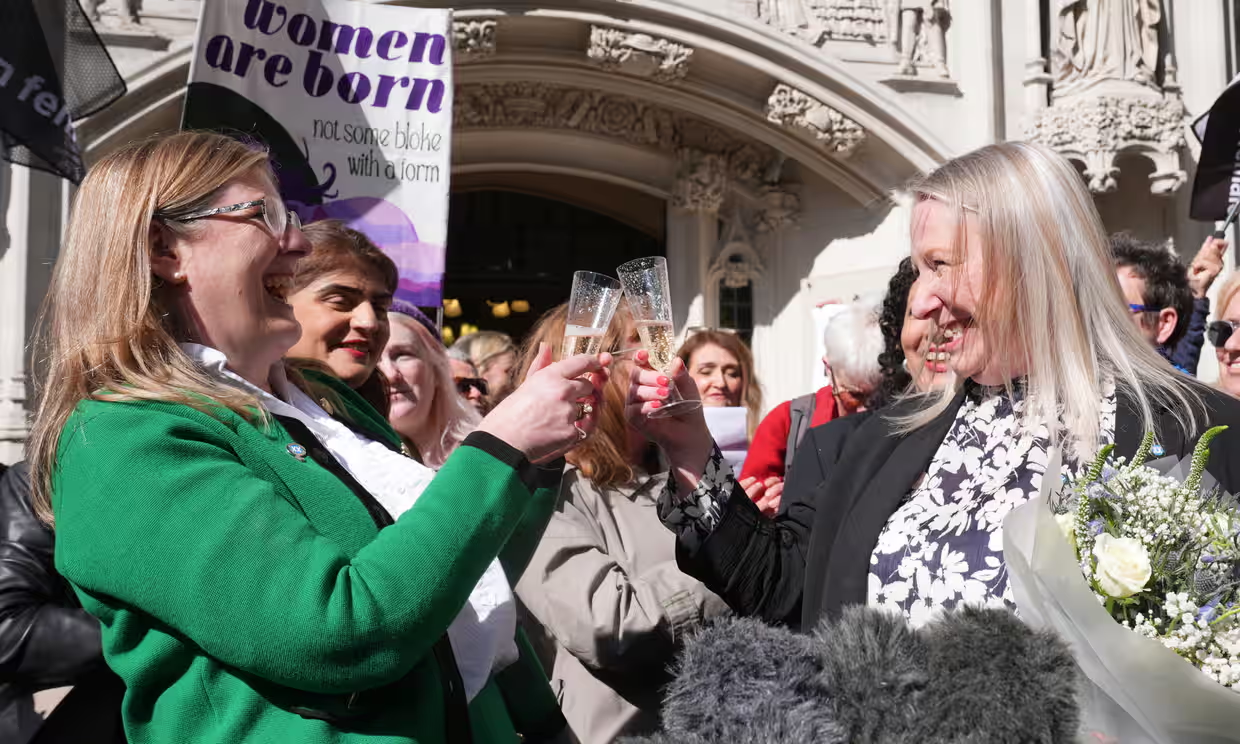
Anti-trans campaigners celebrating what they saw as their ‘win’.
Why defining womanhood as ‘biological’ is dangerous
Things get murky pretty quickly when we start deciding if someone is ‘biologically’ a woman, and we have seen this play out in the sporting world ever since women were allowed to compete.
Think back to last year. Algerian boxer, Imane Khalif, faced an onslaught of abuse after her opponent ended a fight 46 seconds in saying ‘she had to preserve her life’, and Khelif was accused of being a ‘man’ who should not have been allowed to be in the women’s tournament. Speculation online incorrectly labelled Khelif as trans, or claimed that she has DSD and is intersex. This was on the basis that she failed a gender eligibility test in 2023 which was flawed and was not recognised by the IOC.
There is a long list of women in the sporting world, many of them Black and Brown, who have been hounded by this, either online or by being forced to do dubious sex tests. This has included Caster Semanya, Serena Williams Dutee Chand, Helen Stephens, Ewa Klobukowska, María José Martínez-Patiño, Santhi Soundarajan.
Tests have included stripped-off examinations, chromosome tests, hormone testing…all of which have been controversial and scientifically flawed.
Our bodies are diverse, and it just doesn’t work trying to put us all into neat boxes. Just look at this post by Rae Smith (aka cult.of.rae) where they explain how their existence as an intersex person contradicts it all.
“As an intersex person I am biologically male and biologically female depending on which test you give me. So my body is externally female but my chromosomes are XY which is male chromosomes. I have a womb but I don’t have any ovaries. I was assigned female at birth but later discovered to be male on a DNA level. So am I welcome in none of the spaces or all of the spaces?….should we just go on pretending that I don’t exist?” ~ Rae Smith
When we do try and put everyone in a neat box we start going down a very slippery slope of white supremacy thinking..
Quoted in The Independent, medical anthropologist Danyal Kade Doyle Griffiths connects the dots.
“These examples strike me as particular cases where racism and transphobia and intersex phobia are kind of inseparable…It ties back to a much longer history of the way that race is gendered, in which Black women are taken to be more masculine compared to white women”.
Cheryl Cooky, professor of American studies and women’s, gender and sexuality studies at Purdue University points out that our idea of womanhood “is often reliant upon Westernized notions of white femininity or standards of white beauty”.
We would go further, and point out that before colonisation, many countries, cultures and indigenous communities had very diverse ways of understanding gender and sex. One of the ways colonial rule was enforced, and people were controlled and assimilated into the colonial system, was by forcing the gender binary and heterosexuality onto the population. Activist Alok Menon explains this in this YouTube video.
“When women in the west began to advocate for the right to wear pants in the west, what white men would say is “this is going to descend into savagery”. That to be a civilised society is one in which there is a clear distinction between men and women… they would point to indigenous people and say: “See? These people are more backwards because they don’t have as many visual distinctions…look these indigenous women are bare chested, look these men have long hair and have tattoos, and accessories and earrings”.
In another post, Menon goes on to explain that ‘gender is a racial construct’:
“What it means to be an Indian woman, a Samoan woman, a white woman, it’s different and culturally contingent. I grew up with strong, badass, hairy, brown women, and that wasn’t a violation of their femininity but oftentimes when we’re saying ‘look like a woman’ or ‘act like a woman’ what we’re saying is act like a white woman”.
We are not stretching when we say that to talk about gender, sex, and womanhood is also to talk about racism, colonialism and white supremacy.
-
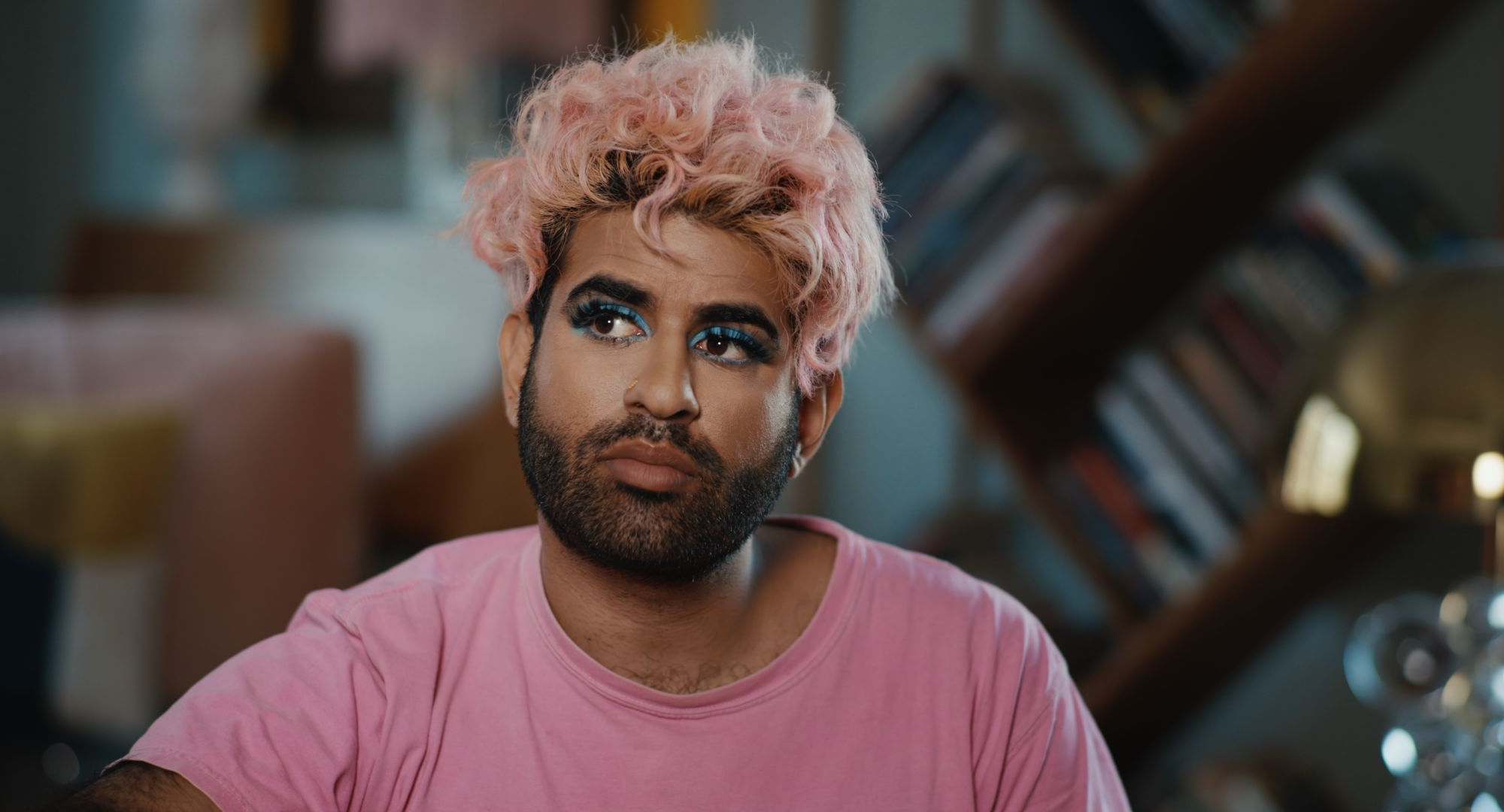
Alok Menon – poet, comedian, public speaker, actor and activist – pictured with a thoughtful look, eyes averted from the camera.
Why the ‘biology’ argument takes all women’s rights backwards
If you are a woman who is on the fence, and the harm that we’ve explained isn’t enough for you to change your mind, this next bit is for you.
Women have fought long and hard for womanhood to be separated from our bodies and from our sole purpose in life being to bear children. If you still think this is about protecting women’s rights, ask yourself these questions.
Can we only be a woman if we present in a way which fits in with the white, heteronormative feminine beauty standard? Are we no longer women if we have PCOS, or higher levels of testosterone, or some facial hair, or broad shoulders, or a strong jawline…? Do we want strangers looking at us and deciding whether or not we belong in a space?
It should be enough to hear about all the ways that this ruling will harm trans, non-binary and intersex people, or disproportionately affects Black and Brown people. But you are kidding yourself if you don’t think it will affect the rights and freedoms of all women collectively if we go down this path.
The frustrating thing is, the energy and money that anti-trans activists have put into this could have been spent on actually dismantling patriarchy and supporting women who really need it.
Trans people are not the threat to women that activists and the media are constantly telling us they are.
1 in 2 r*pes against women are perpetrated by their partner or ex-partner.
6 in 7 r*pes are against women are carried out by someone they know.
98% of adults arrested for sexual offences are men.
Trans people are much more likely to be victims and survivors of abuse rather than perpetrators. Research by Stonewall in 2018 found that more than 1 in 4 trans people in a relationship had experienced domestic abuse. In 2023, it was widely reported that hate crimes faced by trans people rose 11% and the Home Office linked that directly to the toxic public and political ‘debate’ about the existence of trans-gender people.
Trans people make up 0.5% of the population. Of course there might be some isolated cases where a trans person is a perpetrator – just like there are some cases where women are perpetrators – but it is not because they are trans and it shouldn’t be used as an excuse to curtail the rights and safety of all trans people.
The activism of so-called ‘gender critical feminists’, supported by the likes of JK Rowling and the Trump movement, will not stop here. The fight against Trans rights does not exist in isolation and although it is dressed up as ‘women’s rights’, it’s a direct result of patriarchy and white supremacy as systems of oppression.
Whether they know it or not, women celebrating this ruling, whether quietly at home or standing outside of the court building last week, were celebrating a win for oppression, not for women.
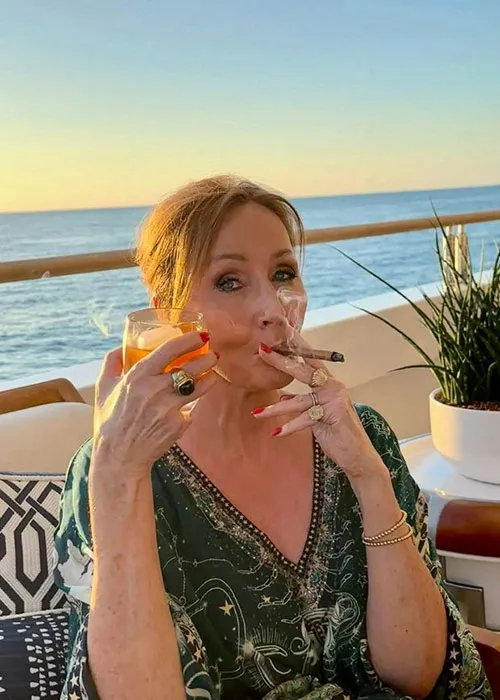
JK Rowling celebrating the court ruling. Pictured on her super-yacht, jewellery on show, drinking whiskey and smoking a cigar. Meanwhile, Stonewall’s 2018 research found that 25% of transgender people have experienced homelessness.
This doesn’t end here
What we are seeing now, is the same logic which has been used in sport, being applied in general society. Driving it is an attempt to push trans people, as well as non-binary people, out of public spaces.
“The goal in all of this is to ramp up as much public hatred and hysteria as possible via politics and the media, to make public life for trans people feel as unliveable as possible. To persuade those yet to transition to stay in the closet and to encourage those who have, to detransition…The cruelty is the point. The toxicity is intentional. Erasure of trans people from public life is the goal” ~ Munroe Bergdorf
And it will not stop at trans rights. Take a look at this image and let it sink in.

Young campaigners pose with placards calling for the ‘gender critical community’ to ‘speak up about the dangers of mass immigration for women’.
This was posted by Jess Gill, founder of Women’s Safety Initiative UK. Their stated mission is to ‘expose the dangers of uncontrolled immigration, put women and girls first, advocate for victims, and demand real solutions’.
We should all be alarmed by this image. The fight for women’s rights is being used to hide the dark underbelly of not only transphobia, but racism too. It is not a stretch to say that the road that we are being driven down is the road to fascism.
This is white supremacy in action, and we all need to be stepping up to stop it.
If you consider yourself anti-racist, and you’re uncomfortable by our take on this, we encourage you to explore that more with yourself. Anti-racism is often internal, and leaning into those feelings of unease and discomfort is where the unlearning happens.
If you are struggling we urge you to reach out for support ❤
Local support
Outreach Cumbria – LGBT – Trans Wellbeing Hub every Monday 2-6pm (except bank hols)
Queer Cumbria – support groups in Whitehaven and Carlisle
PINC LGBT+ Youth – Pride in North Cumbria (centres in Carlisle and Maryport)
National helplines + support
Switchboard LGBT+ Helpline – LGBT+ helpline.
TRUK Listens – a helpline for trans people who need someone to talk to, started by Trans Radio founders Avril and Lucy Clark.
Black Trans Alliance – peer to peer support
Spectra – peer-led trans services accessible to all trans and gender-diverse people, including 1-2-1 health advocacy support and counselling, peer mentoring and monthly online and in-person social groups.
For further reading check out…
Our Intersectional Ally reading list
