
A Toxic Debate?
If you open up a thread for a news story about refugees and people seeking asylum, you can guarantee there will be two sets of people in the ring – and yes, it can feel like a field of combat. Let’s just say some comments aren’t exactly offering a warm welcome to the UK, and they’re often in the majority on a thread. Alongside these, there will be some comments which seek to counter misinformation, arguing for a more welcoming approach. As an organisation, we regularly post about refugees and people seeking asylum, and our ‘myth busting’ posts have seen some of our highest engagement. We believe it is important that everyone’s views are listened to. It is not our role to dismiss the very strong views of those in established communities who are questioning the arrival of people new to those communities, and we would never want to do that. What we do think, though, is that there is a lot of misinformation out there, and we think it is our responsibility to be part of the counter narrative. We asked two of our volunteers, Liam and Karen, why they have taken the time to engage in social media debate. Both have been active contributors to our organisation and the online debate, here’s their thoughts.
 LIAM BEECHER
As we discussed in a recent article, people seeking asylum have been temporarily housed in a hotel in Whitehaven centre- The Waverley. In this article we discussed the common misconceptions about those seeking asylum. However, when news outlets began to report on the situation there were some openly xenophobic comments comparing desperate souls to cattle, or claims that “they” are sending an ‘army’ to the UK to “outbreed us”. Some of these comments were frankly terrifying- you don’t hear this rhetoric in the real world, so what’s happened? Is our typical British politeness hiding the true public perception of people seeking asylum? Is this really how people feel?
How did we get here?
The world of social media is a strange one- often underestimated in terms of how much of a role it can play in shaping a person’s worldview. How the ever-learning algorithms of these tech giants often do not provide an equal balance of ideas, but an echo chamber- a rabbit hole of content for consumers to descend into. Harmless enough when watching a cat video leads to watching Tiger King an hour later, but these algorithms can quickly become dangerous when delving into the world of politics or social issues.
The Alt-Right Pipeline is well documented at this point, but what often isn’t discussed is the blissful anonymity and safety of a computer screen. It is easy to create a faceless account with a false name, allowing the user the freedom to truly speak their mind in a way that nobody would in person. These nameless accounts were generally disregarded as ‘trolls’- often enough the person on the other end of the computer was nothing more than a teenager saying intentionally controversial things to get a reaction.
But two key events have happened in the last decade that have shifted the meta of how people not only feel about immigrants, but how we interact as a population. First Brexit, then Covid lockdowns. The topic of immigration was a focal point of Brexit. The ‘Leave’ campaign centred around the immigration ‘issue’ and ‘taking control of our borders’. Post-Brexit polls showed that 33% (1) of people who voted Brexit cited immigration as a driving factor. What began as legitimate conversations about national security descended into a cultural shift of being sceptical of anything, or indeed anyone, ‘foreign’.

UK Independence Party leader Nigel Farage poses during a media launch for an EU referendum poster in London on June 16.
During Covid lockdowns, social media usage skyrocketed. After all, it was one of the best ways we could keep in touch with loved ones. But whilst we were all interacting virtually, the same conversations about ‘touchy’ subjects such as immigration and racism took place. Only this time, there wasn’t the same social etiquette to follow as there is in person. The cultural shift of Brexit opened the door to more inflammatory discussions around immigration, and when the world could only interact through social media, there was no fear of consequence. The troll accounts disappeared and people started making these comments openly. Following the vote to leave the European Union (EU) there was a recorded increase in race and religious hate crime of 15-25% (2) in England and Wales and it’s worth remembering that the police themselves estimate that only half of all hate crimes are reported.
I am not anti-social media. Social media can be an excellent tool for hearing the opinions of others, finding resources, and starting the conversation about anti-racism but I think it’s important we back our words up with action; some of those I have taken recently include joining Anti Racist Cumbria and volunteering for their events and regularly supporting the communications team, I also researched and wrote this article which helped myth bust and I will continue to speak up on social posts when I can.
In what is often a sea of hateful comments it’s important to see comments that break the mould. That remind Black and Brown people, immigrants, or those seeking asylum that there are people here in Cumbria that care about them. That could make White people second-guess their own views and even begin their anti-racist journey.

Liam (centre) volunteering with (L-R) Andy, Karen, Monica and Niall at Carlisle City of Sanctuary’s ‘Welcome to Your City’ event at Tribe Carlisle in Bitts Park
 DR KAREN LOCKNEY
If I responded to every Facebook comment that I disagreed with, I wouldn’t leave my keyboard all day. Engaging in discussion with strangers who hold views so far from my own isn’t a stress free activity, that’s for sure. However, I found myself responding to some recent posts about men seeking asylum, who are resident in Cumbrian hotels. As I was pressing send, I thought this was probably against my better judgement. I feel very strongly that being a keyboard warrior can be a fool’s errand, and potentially a self indulgence if it is not matched in taking action in real life to tackle whatever problem it is you’re typing furiously about. However, I am actually glad I made these comments, and these are the reasons why:
I am a Labour Cumbria County Councillor and I represent the views of all my residents; I try my best to understand all of those views and to respond to people’s needs. My politics tell me that there are communities in the UK whose needs have been disregarded for decades, especially many Northern communities who have lost industry, and seen low investment. Not everyone will agree with this, but I am very sceptical about the ‘levelling up’ agenda, and I think a far greater commitment to tackling inequality is needed. Levels of poverty are higher than we’ve seen in generations, and there’s a tough winter coming, when the cost of living crisis will really bite.
I can totally understand why people might look at the use of a hotel to house people new to a community, and might wonder if this is right. Where I don’t agree is that the answer to such concerns is channeling that anger towards the people in the hotel, people who are dispossessed and marginalised.
The answer is in channelling that anger upwards.
People are profiting from the housing of people seeking asylum, and it isn’t the people of Whitehaven and Carlisle. ‘Immigration work’ is outsourced to Serco, whose profits were looking a bit in doubt when their lucrative track and trace contracts ended. Take a moment to think about this sentence from Reuters, ‘Serco’s UK & Europe business should benefit from around £100million of additional revenue from immigration compared with last year.’ Its revenue will be around £4.3 BILLION in 2022. The more ‘immigrant work’ there is, the more profit they make. Are the residents of Whitehaven and Carlisle seeing any of that? Are the homeless people of Britain, who commentators often say are more deserving than ‘immigrants’, seeing any of that? Are veterans, again a group whose needs commentators often mention, seeing any of that? Or are Serco shareholders lying back in a hammock on a beach and, if they have a conscience, easing it with a cocktail?
 Might it be cheaper for Serco to house people in under-used hotels in Northern towns than, say, a Lake District or Cotswold village or a London borough? Do they consider the needs of all while they’re counting the readies earned from ‘immigration work’? I would say they care no more for a family in Whitehaven worrying about how they’re going to pay the electricity bill, than they do about the Syrian man seeking asylum who has fled persecution. In fact it suits them for those two camps to be engaged in a raging culture war, because it detracts attention from the piles of cash mounting up on some coastline a long way from West Cumbria, somewhere with smoother tax laws. The 2017 Paradise Papers (3) and the subsequent Pandora Papers (4) both revealed the extent to which corporations such as Serco who have been awarded government contracts were linked to overseas tax-havens.
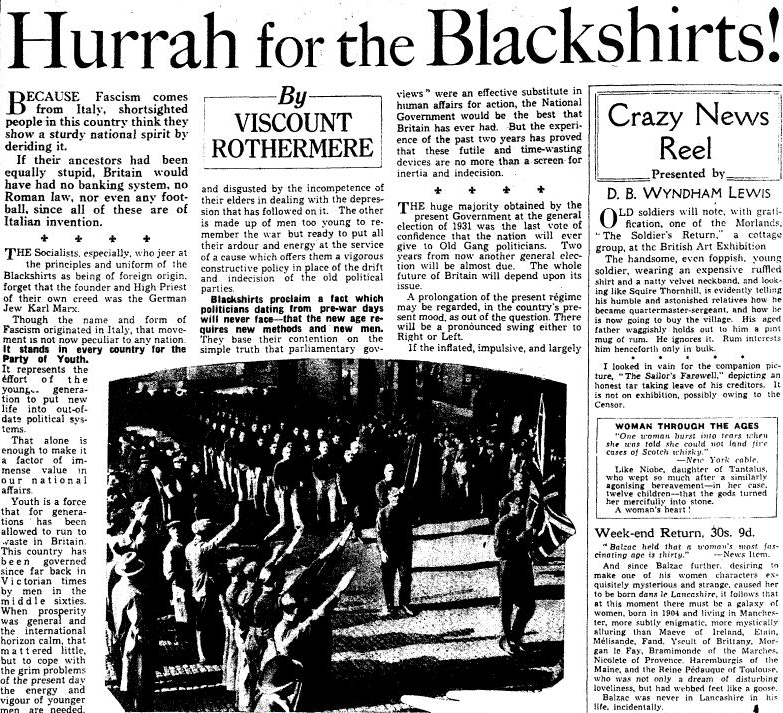
Not to be overdramatic, but fascism rises when people feel helpless against a tide of poverty and inequality, when an alternative, seductive offer comes into play. ‘Outsiders’ are painted as a danger and a threat, and their exclusion is promoted as a solution. 20th century history proves this beyond doubt – we saw it in 1930s Germany, in Italy, and in pockets in Britain with Oswald Mosley’s blackshirts and their charm offensive in working class communities. Fascism doesn’t start with genocide, it starts with promotion of hate, the sewing of seeds of doubt on a very local level. And it takes root if not enough people speak out against it. There’s a popular meme at the moment which says, ‘The road to fascism is littered with people telling you you’re overreacting.’ If people think I am ‘overreacting’ by commenting on Facebook posts, they can jog on, I don’t want to be one of the people who stay silent.
That said, I don’t think the answer is to shout down or dismiss the views of opponents. My politics and activism is founded on fighting for equality for everyone. Helping people seeking asylum doesn’t mean that me – or groups like Anti Racist Cumbria that I am part of – don’t also fight against all inequalities. It’s not The Oppression Olympics here, one marginalised group isn’t taking all the help, while others remain in need. This constantly perpetuated idea of scarcity, that there isn’t ‘enough to go round’ is actually part of the ploy. We are stronger together. If a community is nervous about an influx of people, housed within their community all of a sudden, then that’s understandable, but the answer is, in my view, to start asking questions, and as always, to follow the money. Anger needs directing at Serco, to those making a profit, and to the media class who want to sell papers which shout out headlines filled with hate and misinformation.
Another reason I am glad I made the comments is that they seemed well received by some. On one local paper post, a comment I made offering a kinder view of a protest men in the Carlisle hotel had taken part in, received a lot of ‘likes’ and this was in a thread where harsher comments dominated. Care 4 Calais offer advice on social media engagement, and warn that arguing isn’t always productive (and in fact a lot of accounts are fake/ bots), but they do recommend ‘liking’ a positive comment. It seems when many people view the threads, they are pleased to see a counter narrative. Also, on that post, 3 people from outside the county privately messaged me to say they were glad to read my comments, and to thank me for them. That reinforces my view that there is a need to counter misinformation.
Having said that I understand where doubt comes from, sometimes comments are highly offensive, and there is outright racism. If I can see a way to counter that, I will. Recently someone commented that, ‘They will outbreed us’. That’s just ridiculous, and if I can find a way of shining a light on that, I will. On that occasion, I pointed out people can fall in love with who they want, and thank goodness for that, and also that this is the human race, not a pure breed sheep show. Some days I just can’t scroll past a comment like that.
As I said at the start of this article, I think passing an opinion on social media, if it isn’t accompanied by real life action is a waste of time at best, and a self indulgence at worst. I try my best, if I am going to comment on something (in anger/disagreement, or to express empathy), I will try to match it with some action, however small. So when I thought about my recent interaction on these posts, I matched it up with working with others to organise a fundraising and awareness raising event for Care 4 Calais. So for me, commenting is a way of spurring myself into action as well. In the past I’ve found it all too easy to feel sad about a news story, rant a bit, then turn the TV over and forget about it.
I know Cumbria has a proud tradition of welcoming refugees. The film ‘The Windermere Children’ shows this powerfully, telling the story of Holocaust survivors being welcomed in 1945. I think most Cumbrians watching this would be proud, they wouldn’t doubt for a second this was the right thing to do. It’s easier to have that certainty with hindsight, when history leaves us in no doubt that whatever post-war hardship Britain was facing, however many homeless people and veterans there were, the right thing to do was to give the dispossessed sanctuary. It is perhaps harder to see parallels to today, when we have scaremongering headlines and a hostile environment, and a Home Secretary who says her dream is to see herself on the front page of the Telegraph, waving off the first flight to Rwanda.

The Cumbrian way is to show a welcoming spirit, and if I make a comment on a post, it is to try and remind people of this. I think we are better than some of the threads would suggest. It probably suits the billionaires to let Cumbrians argue with each other, it will suit them for a narrative to become so coloured by anger and resentment, that we lose sight of who is really pulling the strings here. It isn’t people seeking asylum who are a threat to the livelihoods and way of life of Cumbrians, and the more we all join together, the more progress we will make of making this a fair and comfortable place for all. It’s that belief that keeps me commenting.
Sources
