

Author: Erika Ghinelli
Content warning: violence, racism, outdated language
Native American Heritage Day
is celebrated during Native American Heritage Month, in the month of November, on the first Friday after Thanksgiving.
It represents an opportunity to celebrate and acknowledge the rich and diverse histories, cultures, traditions, and contributions of America’s original inhabitants and their descendants.
Why is it needed?
The history of the colonisation of America and the genocide of the First Nations who lived there is not acknowledged enough in school curricula, media and official narratives.
The arrival of European colonisers decimated the local population down to just 10% of the total population who had lived in North America prior to the beginning of colonisation. The Europeans brought diseases the locals had no defence against; they conquered the land with extreme brutality, progressively moving westward; targeted and eradicated species that were vital for the survival of the indigenous people; signed treaties that were never upheld; shut free people in reservations; and annihilated their way of life.
This history is often presented in a different light, glossed over or ignored in mainstream media and educational settings. Think of the power of the ‘cowboys and indians’ rhetoric and brave frontier men v ‘savages’. The racism and violence of the time is not ancient history, instead a sanitised version remains evidenced in the deep inequalities and outcomes of today.
 Native American Heritage Day and Month offer the perfect occasion to learn more about the history of First Nation people, as well as the distinct challenges they have faced both historically and presently, and to become aware of what is our role as allies.
Is the day successful?
The first proponent of a day for celebrating the culture of First Nation people was Dr. Arthur C. Parker, a member of the Seneca tribe who, in 1912, suggested to set aside a day for the “First Americans”, a tradition that was followed for the next three years. Red Fox James, a member of the Blackfoot tribe, rode horseback from state to state seeking approval for a day to honour Indians. On December 14, 1915, he presented the endorsements of 24 state governments at the White House. There is no record, however, of such a national day being proclaimed.
 The first American Indian Day in a state was declared on the second Saturday in May 1916 by the governor of New York.
A joint resolution signed in 1990 declared November National Native American Heritage Month “as this month concluded the traditional harvest season and was generally a time of thanksgiving and celebration for American Indians.” Then, in 2009, President Barack Obama designated the Friday after Thanksgiving as Native American Heritage Day.
The bill, however, was only formally supported by 184 out of 574 federally recognised tribes and many people feel that it is not right to have such a highly commercial day, a day that falls after one of the most controversial American holidays, as the national day to honour the Native American heritage and people.
“As a Native American, I feel slighted. The day after Thanksgiving? Almost an afterthought. With November being Native American Heritage Month, there are 28 other days to select from, with of course Thanksgiving having its long-established day to itself. […] The day after Thanksgiving is one of the most irrelevant days of the year. Most people are off work, families travel, and there is very little in the news cycle. What is the day after Thanksgiving known as in America? Black Friday—not Native American Heritage Day. It is a day when the American consumer plots out the best bargains at the best retailers at the best times to contribute to the American GDP. Not a word or mention in the mainstream media about Native American Heritage Day, just videos of adults fist fighting at 4:00 in the morning in stores over the last trendy toy in stock.”
Brian Perry, citizen of the Chickasaw Nation of Oklahoma
“Native American Heritage Day should be a day when the nation takes time to recognize our contributions, our sacrifices, what happened to indigenous people, what’s still happening to indigenous people. Instead, Native American Heritage Day falls on Black Friday, a day of excess and gluttony and greed and aggressive capitalism. And that’s extremely in poor taste.”
Simon Moya-Smith, citizen of the Oglala Lakota Nation, journalist and activist.
Whether or not you agree about the timing of this day of celebration, you can start to educate yourself now and we have some ideas for you here…
How can you mark Native American Heritage Day respectfully?
The best way to honour this day is by educating yourself about the issues that affect Native American People still today and learn about the history of colonisation in America, the genocide of its First Nation people, the consistent racism, misrepresentation, lack of representation, unequal treatment, and lack of opportunities that Indigenous people are subjected to.
You can read books by Native authors, watch movies and documentaries, support Indigenous-owned businesses and donate to Native American organisations.
There are plenty of resources online and you could start by browsing some of the ones listed below.
Resources:
https://www.insider.com/guides/beauty/native-owned-businesses
https://pages.nativehope.org/native-hope-resource-library#interested
Films and Documentaries:
https://nmai.brandlive.com/native-cinema-showcase-2022/en/pages/all-films
- Smoke Signals (1998)
- Reel Injun: On the Trail of the Hollywood Indian (2010)
- Songs My Brothers Taught Me (2015)
- Wind River (2017)
- Warrior Women (2018)
- Gather (2020)
Books:
- Bury my heart at Wounded Knee – Dee Brown
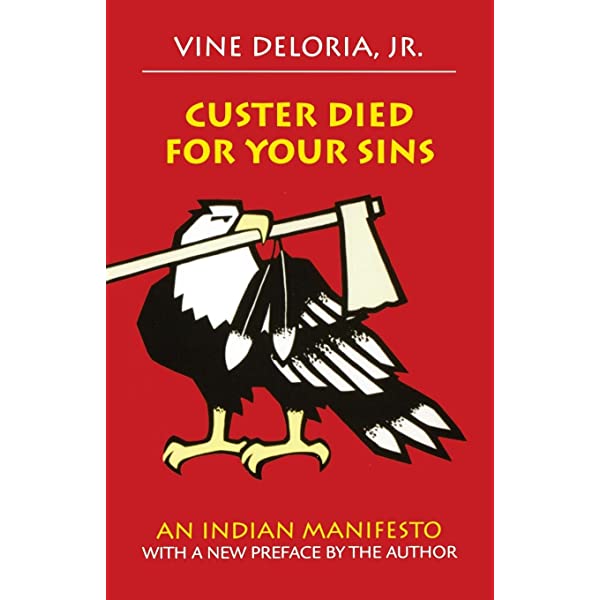
- Custer Died for Your Sins: An Indian Manifesto – Vine Deloria Jr.
- Red Earth, White Lies – Vine Deloria Jr.
- God is red – Vine Deloria Jr.
- Black Elk Speaks – John G. Neihardt
- Lakota woman – Mary Crow Dog
- Braiding Sweetgrass: Indigenous Wisdom, Scientific Knowledge and the Teachings of Plants – Robin Wall Kimmerer
- The Round House – Louise Erdrich
- Winter Counts – David Heska Wanbli Weiden
Young Adults Books
- Chronicle Books”A Snake Falls to Earth” – Darcie Little Badger
- Walking in Two Worlds – Wab Kinew
- Firekeeper’s Daughter – Angeline Boulley
- Apple in the Middle – Dawn Quigley
